Man involved in firearm incident has history of street gang and biker affiliation: Parole board
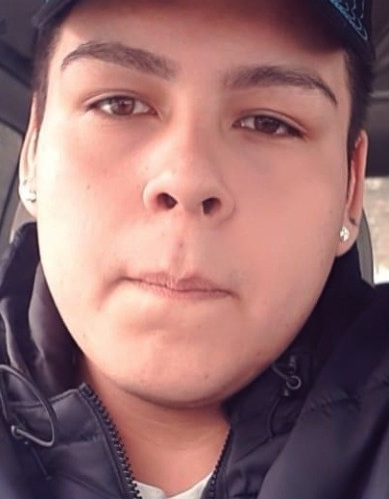
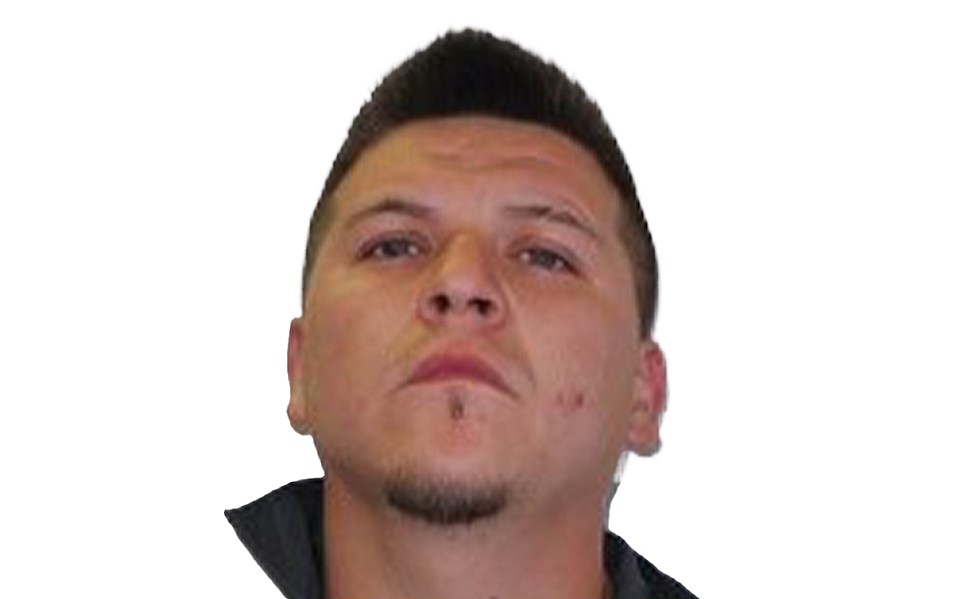
Keagan Panipekeesick (RCMP handout photo)
REGINA – The RCMP are still investigating whether a quadruple homicide on Carry the Kettle Nakoda Nation and a firearm incident the same day on nearby Zagime Anishinabek are connected.
“It is unknown if this incident is related to the sudden deaths on Carry the Kettle Nakoda Nation,” said RCMP in a media release. “We will provide an update on this investigation as soon as we are able.”
On the same day as the quadruple homicide, police had received multiple reports of a man pointing a firearm at people on Zagime Anishinabek, located approximately 95 kilometres away.
In that incident, Panipekeesick, who, according to parole documents, has a history of street gang involvement, and biker affiliations, was charged with pointing a firearm and possession of a firearm contrary to a court order.
“At this time, investigators are examining into whether the firearm pointing incident and the homicides are connected. We are unable to confirm a link at this time,” said the RCMP. “Keagan Panipekeesick is remanded into custody until his next scheduled appearance in Regina Provincial Court on Feb. 11.
“Right now, we can tell you that the investigations continue. Investigators are still determining whether there is any connection between the homicides on Carry the Kettle Nakoda Nation and the firearms incident on Zagime Anishinabek.”
The quadruple homicide
On Feb. 4 at about 11:15 a.m. File Hills First Nation Police Service responded to a call reporting the sudden deaths of four people on Carry the Kettle Nakoda Nation. When officers arrived, they found two men and two women shot to death. Saskatchewan RCMP Major Crimes has taken over that investigation.
Hours later on the same day, at approximately 3:15 p.m., Saskatchewan RCMP responded to multiple reports of a man allegedly pointing a firearm at people on Zagime Anishinabek (formerly known as the Sakimay First Nation).
RCMP then released 29-year-old Keagan Panipekeesick’s photo to the public warning them about the incident on Zagime Anishinabek. Panipekeesick was arrested the next day by Regina Police Service in Regina at a home on Mathieu Crescent. He was charged with pointing a firearm and possession of a firearm contrary to an order.
“We are unable to confirm a link at this time.” – RCMP.
Two other people were arrested at the Regina home with Panipekeesick and RCMP said they are continuing to investigate whether the firearm pointing incident and the four homicides are connected.
“We are unable to confirm a link at this time,” said the RCMP.
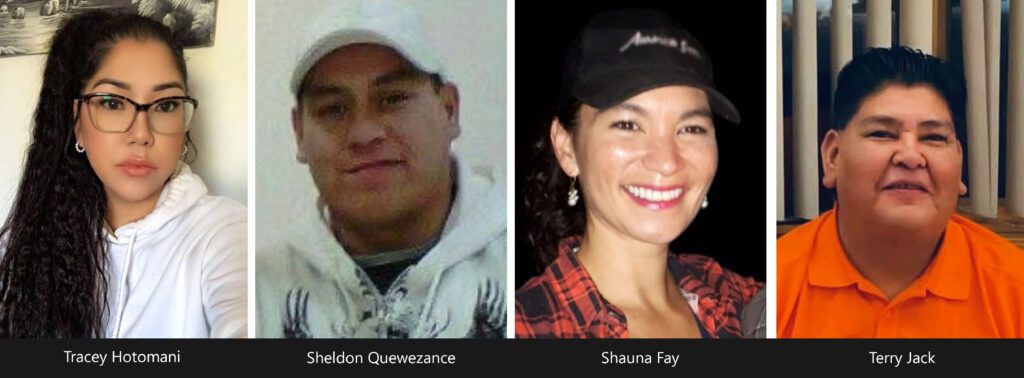
The four murder victims were identified by police as Tracey Hotomani, 34, and Terry Jack, 51, both of Carry the Kettle Nakoda Nation, Sheldon Quewezance, 44, of Zagime Anishinabek, and Shauna Fay, 47, of Indian Head.
RCMP say the murders appear to have been targeted.
Panipekeesick at biker hang out, wearing biker vest
Panipekeesick’s criminal journey has been marked by serious violence and substance abuse. In July 2024, the Parole Board of Canada revoked his statutory release, citing an incident where he was at a biker gathering wearing a biker vest and heavily intoxicated.
“It appears you were also associating with negative peers, which you have denied,” read the parole report. “However, given your return to substance use, which is a direct contributing factor in your offending, the board has been satisfied that your risk in the community did become unmanageable and that your actions were within your own control.”
Panipekeesick was arrested by RCMP after they got a call about a man sleeping in the ditch off the highway.
Officers performed emergency first aid on him but he didn’t respond.
“When you began moving you rolled down the ditch as you were too intoxicated to be able to stand,” said the parole report. “You were unable to tell officers your name but had your institutional identification in your pocket. You were too intoxicated to respond to police questions.”
In October 2024 he was given new conditions.
Media reports at the time of Panipekeesick’s sentencing say that Panipekeesick was in a gang under Native Syndicate and the Hell’s Angels. Panipekeesick was arrrested in a 2016 Regina Police Service sting operation called Project Shred that rounded up gang members.
Past convictions and criminal behaviour
Panipekeesick was serving seven years, seven months, and 15 days in prison. He was given a 10-year weapons ban and a requirement to provide a DNA sample.
According to parole documents, Panipekeesick’s offences began as early as 2012 and escalated over the years. His violent history includes multiple assaults, break-ins, and weapons offences.
In 2016, as a street gang member, he was involved in a series of violent crimes, including assaults with a weapon, home invasions, and drug-related offences. In one instance, he and his accomplices assaulted a victim with a flashlight, hammer, and log, leaving the man with severe injuries.
Later that year, Panipekeesick was involved in a violent home invasion where his accomplice fired a gun inside a victim’s home.
“The victim yelled for his wife to stay downstairs and release the dogs and you and your accomplice fled.” – Parole Board
“Your accomplice was masked and carrying a sawed-off shotgun,” said the parole report. “You demanded money and the equipment before assaulting him. Your accomplice shoved a gun in the victim’s face and you told him to shoot him. While the victim was attempting to get control of the situation, your accomplice pulled the trigger, discharging two bullets into the dresser and the floor. The victim yelled for his wife to stay downstairs and release the dogs and you and your accomplice fled.”
Days later, when Panipekeesick was arrested, police found a significant amount of fentanyl and cash on him.
Gladue factors
The parole documents gave a snapshot of Panipekeesick’s troubled upbringing that was marked by family fragmentation, exposure to violence, and substance abuse.
“Gladue factors present in your upbringing include family fragmentation, exposure to violence, substance abuse, security threat groups and the foster care system, and poverty,” said the report.
Raised in a tumultuous environment, he experienced physical and sexual abuse during his time in foster care.
He later dropped out of school in Grade 7 or 8 as he found it difficult and turned to selling marijuana as a teenager, eventually becoming involved with a street gang that was heavily involved in drug trafficking.
These early traumas are believed to have contributed to his struggles with addiction and involvement in criminal activity. His criminal history reflects a pattern of destructive behaviour influenced by substance abuse and negative peer associations, said the parole board.
Parole documents aren’t clear when he was released after his parole was revoked but they said, “According to the Corrections and Conditional Release Act, you will again be released on statutory release, subject to supervision until the expiration of your sentence. Not to associate or communicate with anyone involved in criminal. Activity, substance abuse or security threat groups.”
The law requires that federal offenders who have served two-thirds of a fixed-length sentence be released from prison under supervision at that point. This is called “statutory release.”
Statutory release does not end an offender’s sentence. Instead, offenders serve what is left of their sentence in the community. They must report regularly to a Correctional Service of Canada (CSC) Parole Officer and follow conditions. On statutory release, offenders have some time under supervision in the community before their sentence ends to help them return to society as law-abiding citizens.
news@criminalsamongus.ca