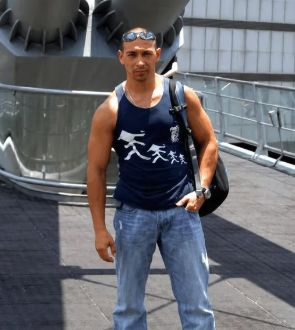
Linden Grier died following a violent altercation inside a Fort Macleod home.
Linden Grier (Facebook)
CALGARY, Alta. — Alberta’s top court has upheld the manslaughter conviction of a Cardston man who killed another man during a late-night confrontation fuelled by jealousy and social media humiliation, rejecting arguments that the trial judge misinterpreted evidence about injuries and intoxication.
Cullen Drake Tailfeathers was convicted in May 2024 for the death of Linden Grier following a violent altercation inside a Fort Macleod home. In a unanimous decision released Monday, the Alberta Court of Appeal dismissed Tailfeathers’ three grounds of appeal and confirmed the conviction.
The deadly confrontation began when Tailfeathers, then in a deteriorating romantic relationship with a woman identified as Ms. English, saw social media posts she had crafted “designed to, and ultimately did, hurt and humiliate” him – including a photo of Grier shirtless inside her home.
“He was hurt, confused and very angry about the posts,” the Appeal Court noted in summarizing the trial judge’s findings.
What followed was a series of increasingly threatening text messages from Tailfeathers to English in the early morning hours of May 23, 2021. “I don’t want to go off my rocker and go and hurt someone,” he wrote at 1:44 a.m., followed by “Or else I’ll just come there.” Later messages included “I will hurt him” and “I have nothing left to lose.”
Tailfeathers then drove 62 kilometres from Cardston to Fort Macleod, where he confronted Grier in the basement of English’s home. Tailfeathers admitted throwing the first punch and exchanging blows with Grier, who was 10 inches shorter and 120 pounds lighter. The fight ended when Tailfeathers delivered a final blow to the right side of Grier’s head, causing him to fall unconscious onto a toilet and slide to the floor. Grier died from blunt head trauma, including a sub-arachnoid hematoma – bleeding on the brain.
Following the attack, Tailfeathers sent additional texts, including “Should I come back and finish him off?” and “Any time you try get me jealous with another man. I’ll do that over and over again.”
Self-defence claim rejected
At trial, Tailfeathers testified he acted in self-defence, claiming Grier emerged from a bathroom in an aggressive stance with closed fists, prompting him to throw the first punch out of fear for his safety.
The trial judge rejected this version, calling Tailfeathers’ testimony “unbelievable” and “choreographed” – “styled like a 19th century gentlemanly exchange between matched and consenting pugilists.”
She found the text messages revealed his true motive: that he “left his home in Cardston in the middle of the night to confront and ultimately fight Mr. Grier” – a motive that “grew stronger as the night went on” and persisted “even after the fight was over.”
The judge also noted the significant physical disparity between the two men, making it “very implausible” that Grier could have landed blows to Tailfeathers’ head as described. Grier’s blood alcohol level was 2.78 grams per litre – approximately three-and-a-half times the legal driving limit and within the range classified as “extreme drunkenness” with impaired consciousness and coordination.
Additionally, a forensic investigator testified there was “almost no blood, discolouration, bruises or injuries to Mr. Grier’s right hand” – inconsistent with Tailfeathers’ description of a blow-for-brawl fist fight. An autopsy similarly noted no injuries to either hand beyond a single contusion on the right upper arm.
Appeal dismissed
On appeal, Tailfeathers argued the trial judge erred by drawing improper inferences about the lack of injuries to Grier’s hand and his level of intoxication, misapprehended his evidence about who threw the first punch, and provided insufficient reasons for disproving self-defence.
The Appeal Court acknowledged that the trial judge did misapprehend Tailfeathers’ evidence on one point – who threw the first punch – as he had consistently maintained that he threw the first punch in response to Grier’s aggression. However, the court found this error was “not overriding” because the trial judge provided “multiple reasons for disbelieving the appellant’s evidence that he acted in self-defence.”
“The text messages revealed the appellant’s ‘true motive’ – that he left home to confront and ultimately fight Mr. Grier,” the Appeal Court wrote. Combined with Grier’s extreme intoxication, the size disparity between the two men, and the credible testimony of Ms. English’s children who witnessed part of the confrontation, the court found ample evidence supporting the conviction.
“The trial judge’s reasons for conviction were lengthy and detailed and are sufficient to permit meaningful appellate review,” the court concluded, dismissing all grounds of appeal.