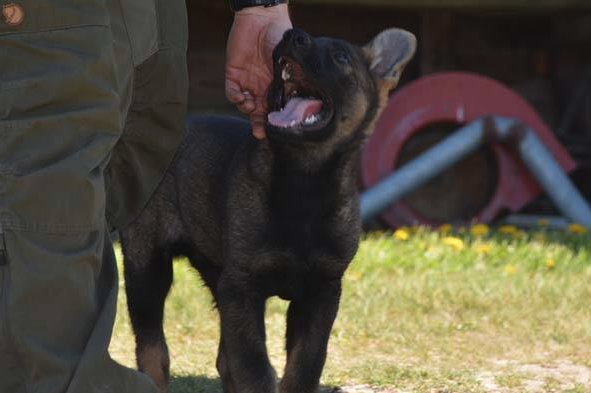
Once fully trained, Hank will become a full-fledged member of the RCMP’s Southeast District Police Dog Service Unit.
KELOWNA, BC — Since 1935, the RCMP has relied on police dogs to assist in several investigations, proving themselves time and time again as invaluable partners in Canada’s police force.
The breed of choice for the RCMP is the German shepherd. Their versatility, strength, and courage make them exceptionally well-suited for police work. Combined with their physical stature and ability to adapt to a wide range of climates, these traits make them the ideal canine partners for operational policing.
Gender is not a determining factor; what matters is whether the dog demonstrates the drive and temperament required to become a Police Service Dog (PSD). Each dog must be in excellent physical condition, structurally sound, and possess a strong hunting instinct.
Every year, the next generation of police dogs enter the official training program that begins when the pup is between the ages of 13 to 15 months. One of these next generation pups has come to Kelowna and has been paired with Cst. Mike Bobinski, a seasoned veteran of the dog handling program.
Cst. Bobinski has been a PDS handler since 2009 and is currently working with PDS member Luger while training the newest recruit “Hank.” Luger is the third dog he’s worked with on the road but is nearing retirement. Before he leaves the RCMP, Luger will act as a big brother to Hank, helping introduce him to the realities of police work.
With a proven track record in training, Cst. Bobinski was given the rare opportunity to personally select Hank from a litter of puppies. Establishing an early connection can be a key factor in a dog’s training success. This hands-on selection process is not common practice; typically, a pup is assigned to a detachment and paired with a handler upon arrival.
Training is a gradual and demanding process for both handler and dog. It begins as early as eight weeks of age, with a focus on building trust and foundational skills. Pups are assessed at six, nine, and 12 months to ensure they are developing as expected and demonstrating the traits required for police work. These evaluations measure courage, intelligence, curiosity, scenting ability (including tracking and searching), and overall composure in stressful situations.
At approximately 13 months old, both dog and handler attend formal training in Innisfail, Alberta. This phase lasts between three and six months and involves intensive instruction across multiple disciplines, including tracking, searching, criminal apprehension, obedience, and specialized detection work such as drugs or explosives.
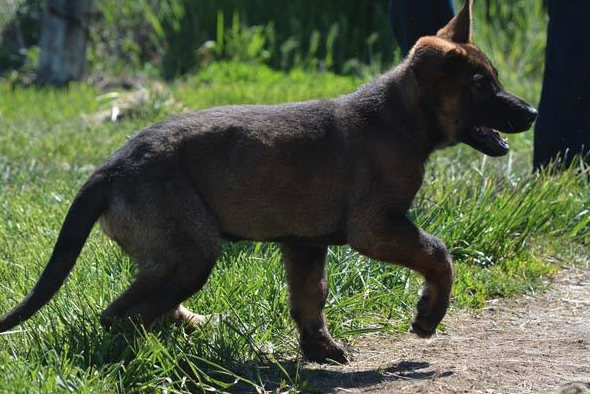
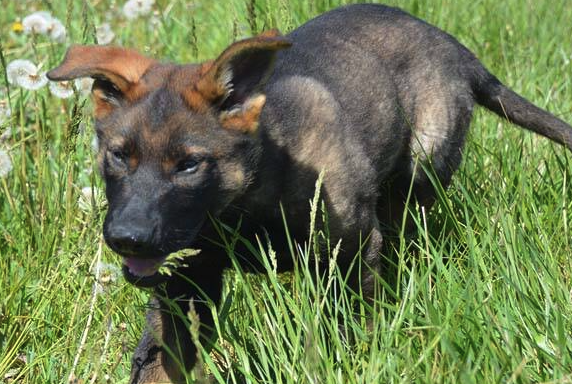
Everyday in training matters for Hank as he goes through the gruelling process. When he does get some down time, he loves spending time playing with Luger on Cst. Bobinski’s farm along with their Great Pyrenees Luna.
Born on February 13, 2026, Hank is approaching four months old and has just over 60 days before his first benchmark assessment. Cst. Bobinski and Luger are optimistic that he is on track to meet the RCMP’s developmental milestones.
Once fully trained, Hank will become a full-fledged member of the RCMP’s Southeast District Police Dog Service Unit. In this role, he will assist in a wide range of operations, including tracking suspects, locating missing persons, apprehending individuals fleeing from police, and supporting Emergency Response Teams during high-risk incidents. PSD teams in the Southeast District respond to approximately 5,000 calls for service each year, ensuring that Hank will have a busy and impactful career ahead.
For more information about the RCMP Police Dog Service visit RCMP Police Dog.