Study began in Saskatchewan, where findings contributed to successful recovery of human remains in a homicide investigation.
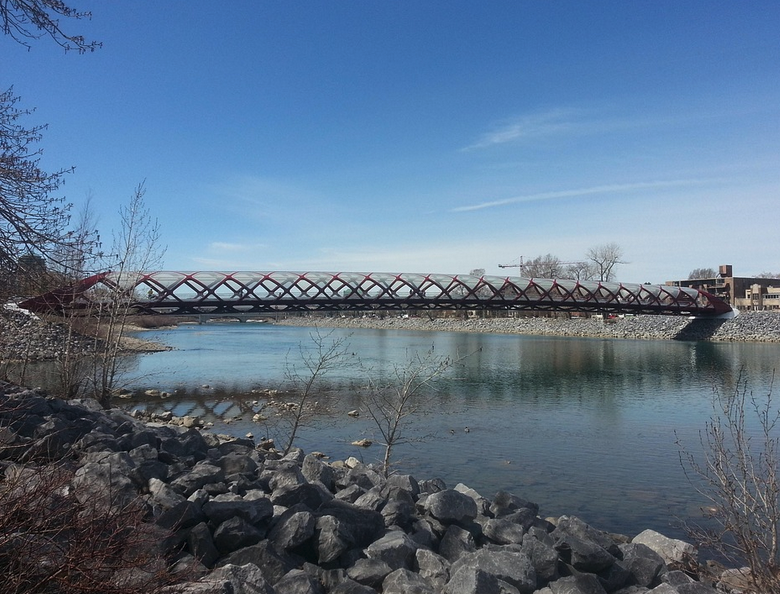
Peace Bridge over the Bow River in Calgary
CALGARY, Alta., — A team of leading researchers, spearheaded by a University of Saskatchewan scientist, is launching a groundbreaking study in partnership with the Calgary Police Service to track how submerged remains move through the Bow River — a project that has already helped solve a homicide investigation in Saskatchewan.
The study, which also involves the University of Windsor, will place pig cadavers equipped with GPS tracking devices into the river. The devices will record depth, temperature and distance travelled, allowing researchers to remotely monitor the cadavers until they become buoyant. At that point, trained personnel will conduct a controlled recovery.
Pig cadavers are widely accepted in scientific research as a valid substitute for human bodies.
“This research will give us data we simply don’t have right now,” said Dr Iain Phillips, Adjunct Professor at the University of Saskatchewa. “By understanding how remains behave in the Bow River – how far they travel, where they move and when they surface – we can develop evidence-based models that improve recovery efforts. Ultimately, this work is about helping investigators find answers sooner and bringing closure to families.”
The study began several years ago in Saskatchewan, where findings directly contributed to the successful recovery of human remains in a homicide investigation, according to the research team.
Calgary police say the collaboration reflects a commitment to evidence-based practices in missing persons and homicide cases.
Residents and Bow River users may notice activity related to the study over the coming weeks. Police are asking Calgarians not to approach, interfere with or disturb any research equipment.
The data collected will be used to create predictive models to inform future search strategies — helping investigators determine where and when human remains are most likely to be located in the Bow River.