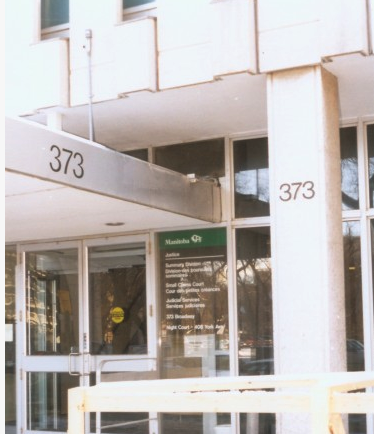
Winnipeg court (Google Earth)
WINNIPEG, Man., — A Winnipeg man has been found guilty of communicating for the purpose of obtaining sexual services, after a judge dismissed his claims that he was entrapped by an undercover police operation.
Tevin Olivier-Job was arrested in a Winnipeg hotel room in June 2024 after responding to an online advertisement posted by an undercover officer posing as an escort. While the court found him guilty of the offence under section 286.1(1) of the Criminal Code, the key issue became whether the police had gone too far, essentially “luring” him into committing the crime.
Provincial Court Judge D. Guénette ultimately ruled against Mr. Olivier-Job. The judge noted that the police operation was a legitimate “bona fide inquiry,” aimed at addressing concerns about human trafficking and exploitation in the sex trade.
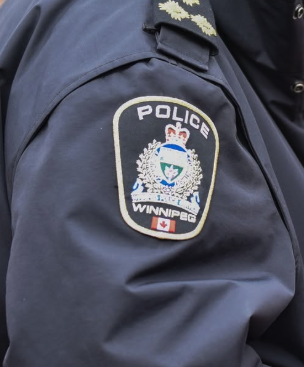
The court heard that the officer, Detective J. McLean of the Winnipeg Police Service’s Counter Exploitation Unit, posted a webpage on the escort services subdirectory of the classified site LeoList. Judge Guénette accepted that this was a “sufficiently precise virtual space” to target individuals seeking to buy sex, referencing recent Supreme Court guidance on police operations in online spaces.
Mr. Olivier-Job, who represented himself, argued that the police did not have reasonable suspicion about him personally and that the investigation was a “fishing expedition.” He also pointed to a moment in the encounter where he initially walked away from the hotel room door, only to be drawn back by the officer’s texts. He further argued that Detective McLean had overstepped by denying she was a cop and by continuing the conversation after he stated he wanted “nothing illegal.”
However, the judge rejected these arguments. In his decision, released June 16, 2026, Judge Guénette said it was Mr. Olivier-Job who re-engaged the officer via text after initially leaving and proposed coming back up to the room. The court also characterized the defendant’s repeated claims of wanting “nothing illegal” not as a good-faith boundary, but as a self-serving attempt to create “evidentiary insulation” or “insurance” in case it turned out law enforcement was involved.
“I do not interpret Mr. Olivier-Job’s comments about nothing illegal as being about purposefully and meaningfully setting firm boundaries of the services he was seeking to engage,” Judge Guénette wrote.
On the question of Detective McLean’s denial of being a cop, the judge ruled that requiring her to reveal her identity would “defeat the undercover operation” and hand criminals a tool to “unravel” the investigation. He further noted that “in Mack, the Supreme Court generally affirms that undercover operations are legitimate law enforcement techniques – particularly for consensual crimes which are difficult to detect.”
“The singular fact that in this instance Det. McLean denied being a police officer does not on its own amount to an abuse within the meaning of the entrapment doctrine,” the judge wrote.
“In my view, police in this instance did not overstep. They did not cross the line into inducement or the manufacture of the offence,” the judge concluded.
The judge found that the officer’s conduct was “well within the parameters of simply providing an opportunity” and did not bring the administration of justice into disrepute.
“On the whole, this was not state conduct disentitling a conviction,” the judge ruled, upholding the finding of guilt against Mr. Olivier-Job.