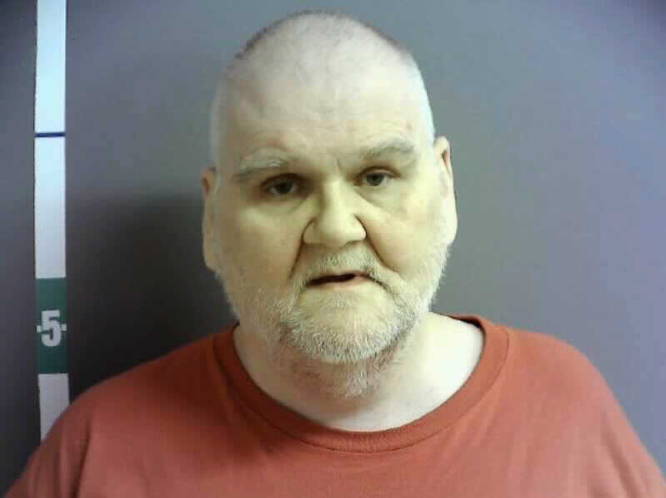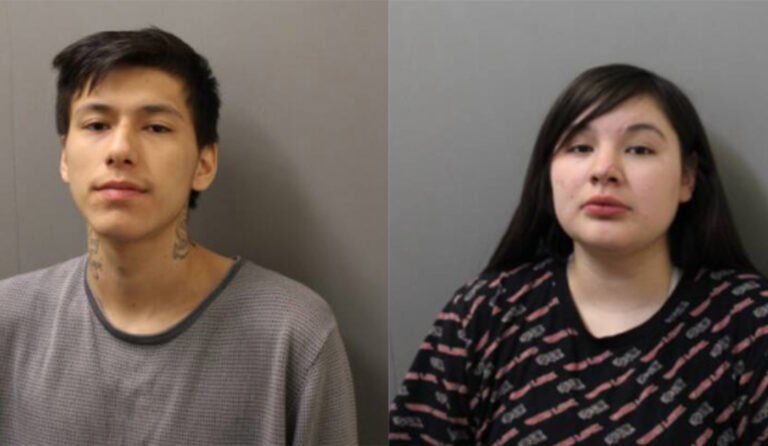
Josh Benoit guilty of first-degree murder.
STEINBACH, Man., A Manitoba judge has found Josh Benoit guilty of first-degree murder in the death of 20-year-old Mackaylah Gerard-Roussin, whose body was found in a clandestine grave in rural Manitoba in August 2022.
Justice Grammond of the Court of King’s Bench delivered the verdict Monday, concluding that the Crown’s circumstantial case left no reasonable inference other than Benoit’s guilt. The decision followed a judge-alone trial held in February 2026.
Gerard-Roussin was last seen leaving her Winnipeg home between 10:30 p.m. and 11:00 p.m. on Aug. 25, 2022. Her body was discovered three days later, wrapped in a tarp inside a plastic container buried near the intersection of Highway 210 and Provincial Road 58E, south of La Broquerie, Manitoba.
The court heard that Benoit, then 20, and the victim had reconnected in the summer of 2022. On the night she disappeared, Benoit messaged her on Snapchat asking “Wanna hang out,” later writing “I’ll come get you.” Traffic camera images showed a vehicle matching his grey Mazda3 near her residence, and her DNA was later found on fabric recovered from his car after he set it on fire.
Justice Grammond said that the accused dug the grave on the same evening Gerard-Roussin vanished. Two local residents, Dylan Kantimer and Bruce Ascoli, testified they saw a male with his shirt pulled over his face digging a hole near the intersection. Kantimer recorded the license plate of a grey Mazda3.
Two days later, on Aug. 27, Benoit’s father attended his son’s home in Steinbach, changed a flat tire on the Mazda3, and opened the back hatch. He testified he saw a hand beneath a tarp and called 911. Benoit fled in the vehicle before police arrived. Later that afternoon, officers located him on a highway near La Broquerie. Seconds after he exited the car, flames and smoke erupted from the interior. A fire investigator determined the blaze was intentionally set using an accelerant.
The following day, police and forensic anthropologist Dr. Emily Holland excavated the grave. Gerard-Roussin’s body showed multiple injuries: stab wounds to the neck that punctured both jugular veins, significant blunt force trauma to the head and face, puncture wounds, and ligature marks. Pathologist Dr. Linnea Duke testified the cause of death was stab wounds to the neck, causing rapid blood loss.
“The only reasonable inference that can be drawn is that the accused inflicted the fatal injuries upon the Deceased,” wrote Justice Grammond, citing Benoit’s purchase of a plastic container, tarp, baseball bat, duct tape, and concrete mix at Canadian Tire two days before the murder – all paid for in cash while wearing gloves and sunglasses.
The judge also pointed to Benoit’s post-offence conduct: fleeing after his father’s 911 call, turning off his phone, burying the body, and setting the car on fire. “The accused set the Vehicle on fire using an accelerant, in my view because he wanted to destroy evidence including the Deceased’s clothing and phone,” the decision states.
While the defence argued there were gaps in the narrative – including no direct evidence of when or where the killing occurred – and suggested Benoit may have been an accessory after the fact or acted out of deteriorating mental health, Justice Grammond rejected those possibilities as speculative. The accused’s father had testified that Benoit’s mental health was declining in the months prior, with paranoia and confusion, but the judge found no evidence that this negated his ability to form intent or to plan and deliberate.
“I have considered the nature and extent of the harm inflicted upon the deceased, and in particular the fact that she may have been incapacitated by significant blunt force trauma, that her death was caused by sharp force injuries to her neck, and that multiple weapons were used to injure her,” reads the decision. “I am satisfied that the nature and extent of the injuries reflected an intention to kill.”
On the elements of planning and deliberation, Justice Grammond noted Benoit dug the grave with precision, using a tape measure to create square, vertical walls that appeared “purposely built to fit the container.” The judge concluded this reflected a calculated scheme devised before Benoit picked up Gerard-Roussin on Aug. 25.
“The murder was planned and deliberate,” states the decision. “There is no alternative, reasonable inference to be drawn from the evidence before me.”
Benoit was convicted of first-degree murder. A sentencing hearing has yet to be scheduled. First-degree murder carries an automatic life sentence with no eligibility for parole for 25 years.
The Crown was represented by Renée Lagimodière and Danielle Simard. Benoit’s defence counsel were Jeremy Kostiuk and Stefania Whidden.